Psilocybin
From WikiPsilocybin, the free psilocybin encyclopedia — updated daily
Recent events
- Aug 8, 2026 Research Johns Hopkins publishes landmark study on psilocybin's effect on default mode network connectivity
- Aug 8, 2026 Policy Colorado approves first wave of psilocybin healing centers under regulated dispensary model
- Aug 7, 2026 Culture New survey finds 18% of tech workers have microdosed psilocybin for focus and creativity
- Aug 7, 2026 Research VA-funded trial shows psilocybin reduces PTSD symptom severity by 62% in combat veterans
- Aug 6, 2026 Culture Huberman Lab dedicates full episode to psilocybin neuroplasticity mechanisms and dosing protocols
What is psilocybin?
Psilocybin is a naturally occurring psychedelic compound produced by more than 200 species of fungi, commonly known as "magic mushrooms." When ingested, the body converts psilocybin into psilocin, which interacts with serotonin receptors in the brain to produce altered states of consciousness, visual and auditory changes, and profound shifts in perception and thought.
First isolated and synthesized by Swiss chemist Albert Hofmann in 1958, psilocybin has been used in indigenous ceremonial practices for thousands of years. Archaeological evidence suggests human use of psilocybin mushrooms dating back at least 6,000 years in Mesoamerican cultures.
How it works
Psilocybin is a prodrug — biologically inactive until the body metabolizes it. After ingestion, alkaline phosphatase enzymes in the gut and liver remove a phosphate group, converting psilocybin into psilocin (4-hydroxy-N,N-dimethyltryptamine).
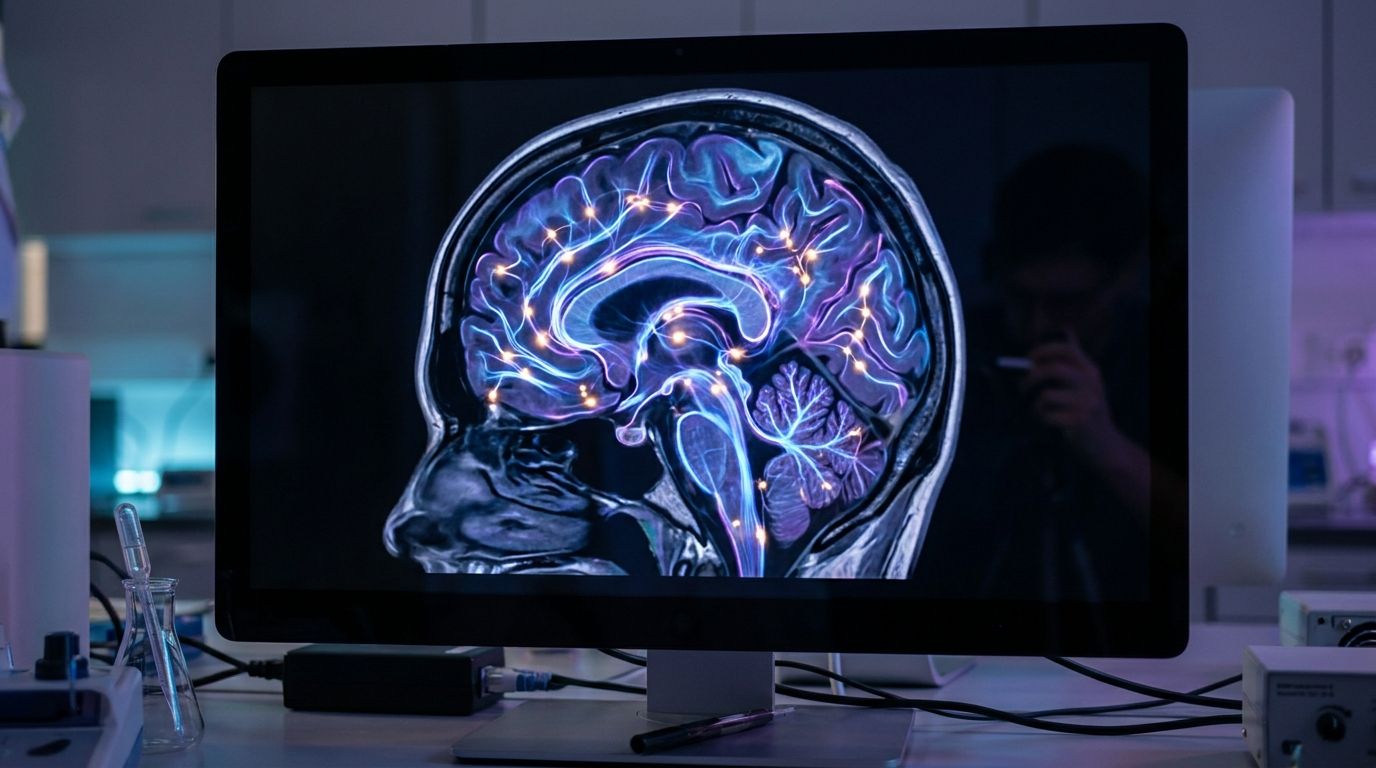
Psilocin's primary mechanism of action is agonism at serotonin 5-HT2A receptors in the prefrontal cortex. This triggers a cascade of effects:
- Default Mode Network (DMN) disruption — reduces the activity of the brain's "autopilot" system, allowing novel neural connections to form
- Increased neural connectivity — brain regions that don't normally communicate begin to interact, producing synesthetic and associative experiences
- Neuroplasticity promotion — stimulates dendritic growth and synaptic density, particularly in the prefrontal cortex and hippocampus
- Emotional processing — enhances amygdala responsiveness to emotional stimuli while reducing fear-based reactivity
Research & clinical trials
The last decade has seen an unprecedented resurgence in psilocybin research, with major institutions including Johns Hopkins, Imperial College London, NYU, and Yale conducting rigorous clinical trials.
Key research milestones
- 2016: Johns Hopkins and NYU simultaneously publish landmark studies showing psilocybin produces substantial and sustained decreases in anxiety and depression in cancer patients
- 2020: Johns Hopkins Center for Psychedelic & Consciousness Research established with $17M in funding
- 2021: JAMA Psychiatry publishes randomized trial showing psilocybin therapy is at least as effective as escitalopram (Lexapro) for major depressive disorder
- 2023: FDA grants Breakthrough Therapy designation for psilocybin-assisted therapy for treatment-resistant depression
- 2024–2026: Multiple Phase 3 clinical trials underway or completed for depression, PTSD, addiction, and end-of-life distress
Therapeutic applications
Psilocybin-assisted therapy combines the pharmacological effects of psilocybin with structured psychotherapeutic support. Current evidence supports its potential in treating:
- Major Depressive Disorder (MDD) — response rates of 60–80% in clinical trials, with effects lasting 3–12 months after 1–2 sessions
- Treatment-Resistant Depression (TRD) — FDA Breakthrough Therapy designation granted; Phase 3 trials ongoing
- End-of-Life Distress — reduces existential anxiety and depression in terminal cancer patients
- PTSD — emerging evidence from veteran-focused studies shows significant symptom reduction
- Substance Use Disorders — promising results for tobacco and alcohol cessation, with quit rates 2–3x higher than conventional treatments
- Cluster Headaches — patient-reported relief and growing clinical support
Microdosing
Microdosing involves taking sub-perceptual doses of psilocybin — typically 50–200mg of dried mushroom material, or roughly 1/10th to 1/20th of a full dose. Practitioners report improvements in creativity, focus, emotional regulation, and general well-being without experiencing psychedelic effects.
While anecdotal evidence is abundant, controlled research on microdosing is still limited. Notable studies include:
- The Beckley Foundation's 2022 self-blinding study, which found some benefits persisted even in the placebo group, suggesting expectancy effects play a role
- University of British Columbia's 2023 study showing microdosers reported improved mood and reduced anxiety compared to non-microdosers
- Ongoing NIH-funded trials evaluating standardized microdosing protocols for cognitive enhancement and mood disorders
Legal status
The legal landscape for psilocybin is evolving rapidly across the globe:
United States
- Oregon — First state to legalize regulated psilocybin therapy (Measure 109, 2020), with licensed service centers operating since 2023
- Colorado — Proposition 122 (2022) decriminalized psilocybin and created a regulated access framework for therapeutic use
- Municipal decriminalization — Cities including Denver, Oakland, Santa Cruz, Seattle, Detroit, and others have deprioritized enforcement
- Federal — Psilocybin remains Schedule I under the Controlled Substances Act, though bipartisan legislation for research exemptions continues to advance
International
- Canada — Special Access Program allows healthcare practitioners to request psilocybin for treatment-resistant conditions
- Australia — TGA approved psilocybin for treatment-resistant depression in authorized psychiatrist settings (July 2023)
- Jamaica & Netherlands — Psilocybin truffles/mushrooms available through legal gray areas or explicit legality
- European Union — Multiple countries exploring regulatory frameworks; clinical trials expanding across Germany, UK, and Switzerland
Safety & considerations
Psilocybin has a well-established safety profile relative to other psychoactive substances. It is not considered addictive, has no known lethal dose in humans, and produces rapid tolerance that discourages compulsive use.
Key safety considerations include:
- Set and setting — psychological state and physical environment significantly influence the experience
- Contraindications — not recommended for individuals with personal or family history of psychotic disorders
- Drug interactions — potential interactions with SSRIs, lithium, and other serotonergic medications
- Cardiovascular — moderate increases in heart rate and blood pressure are common; clinical screening recommended
- Integration — therapeutic benefit is maximized when experiences are processed with trained facilitators or therapists